To be honest, most people buy only one or two properties in their lifetime. This makes them amateur buyers – and that's a fact, not a criticism. On the other side, you have a seller who is usually well-advised, and a real estate agent who has handled hundreds of transactions. The information asymmetry is real.
I regularly see these six mistakes. Not among naive people, but among well-informed, sensible individuals who should nevertheless know better. The tricky thing about buying property is that mistakes often only become apparent months after the deal is closed, long after the notary has signed.
Mistake 1: Financing is arranged too late
This happens all the time. Someone sees a property, falls in love with it, views it, and only then contacts the bank. In a market where good properties are sometimes sold within a week, this is a problem.
Swiss banks require a minimum of 20% equity, with at least 10% coming from your own funds (i.e., not from your pension fund). In addition, there's the affordability calculation: annual mortgage costs generally must not exceed 33% of your gross income. With current interest rates – 5-year fixed-rate mortgages starting at approx. 1.1%, 10-year fixed-rate mortgages starting at approx. 1.5% – this looks feasible for many. However, banks often calculate with a hypothetical interest rate of 5% to ensure that you remain affordable even if interest rates rise.
What this means in practice: obtain financing approval before you start searching, not as an afterthought. With a clear budget, you can also act faster when the right property comes along. And that is crucial in this market.
Financing approval costs you nothing and commits you to nothing. However, it gives you the agility you need when things get serious.
Mistake 2: The property is not thoroughly inspected
Beautiful pictures, good staging, a friendly agent – and you forget to look critically. Yet, the questions that matter are often the uncomfortable ones: How old is the heating system? When was the roof last renovated? Are there any dampness issues in the basement? What are the actual running costs?
For condominiums, there are additional considerations: How much is in the renovation fund of the condominium owners' association (STEG)? Are there any planned renovations that will increase ancillary costs in the coming years? The STEG minutes from the last two to three annual meetings will give you an honest picture of how the community is managed and whether you are buying into a community that systematically addresses problems or simply postpones them.
For single-family homes, I generally recommend an independent building inspection before purchase, or one conducted by an expert in the REMAX network. This costs CHF 500 to 2,000 depending on the property and can save you from a renovation backlog of CHF 100,000.
Mistake 3: Ancillary costs are underestimated
The purchase price is one figure. Few people know the other: In the Canton of Zurich, when buying, you incur a transfer tax of approx. 0.2%, land registry fees, and notary costs. Overall, you should budget approximately 2 to 5% of the purchase price for ancillary costs. For a property costing CHF 1.5 million, this amounts to CHF 30,000 to 75,000, which must be paid in cash and cannot be financed.
In addition, there are ongoing maintenance costs that many underestimate: A guideline for owner-occupied homes is 1% of the building's insured value per year for maintenance and repairs. This isn't a luxury figure; it's a reality over a 10 to 20-year horizon.
Mistake 4: Relying on a single bank consultation
Swiss banks all make offers, but not all offers are the same. Differences in mortgage interest rates can range between 0.1 and 0.4 percentage points, depending on the provider and your negotiating position. For a 10-year fixed-rate mortgage of CHF 1 million, this amounts to CHF 10,000 to 40,000 over the term.
It's worth getting at least three offers: from your main bank, a cantonal bank, and an independent mortgage broker. The effort involved is manageable. The effect can be significant, and we can help you speak with our partner banks.
Mistake 5: Buying the property, not the location
Properties can be renovated. The location cannot. This sounds trivial, but the consequences are regularly underestimated. How will the neighborhood change in the next ten years? Are there any planned zoning changes? What is the public transport connection really like, not just according to the advertisement, but at 7:30 AM?
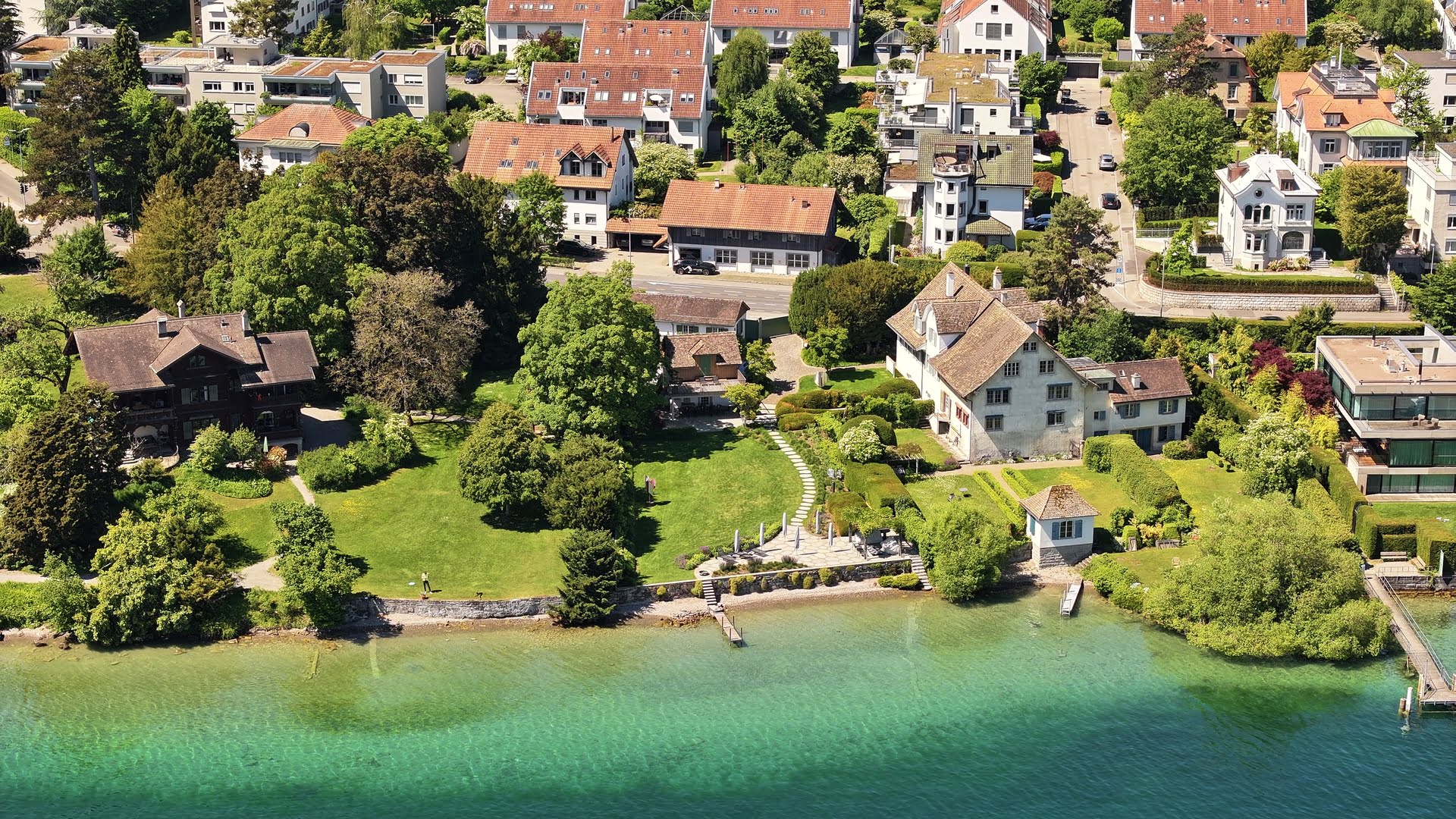
Especially around Lake Zurich, micro-location differences lead to significant price disparities. An extra ten minutes' walk to the train station, or ten minutes less, can amount to CHF 100,000 in resale value. Local knowledge cannot be replaced by internet research. This is one of the reasons why a local real estate agent is not just a door-opener, but a true channel of information.
Mistake 6: You're negotiating against someone who negotiates daily
The seller is well-advised. The seller's agent has had these conversations hundreds of times. And the buyer might be negotiating for only the second time in their life. That's a challenging situation.
An experienced buyer's agent or advisor will cost you a fee, but they bring the same experience to your side of the table. At BC Living, we also provide buyer advisory services: We guide you from the search and property inspection to negotiation and notarization. We know the game from both sides, and that makes all the difference.
A good buyer's agent doesn't negotiate aggressively. They negotiate with information. And that's much more effective.
How BC Living Helps Buyers
As a RE/MAX franchise partner, we have access to a network of over 200 real estate specialists in Switzerland and tens of thousands worldwide. For buyers, this means: We often have access to properties before they are publicly advertised. For people who are actively searching, this is not a marketing promise, but a practical advantage.
Anyone who places a search request with us will be actively informed, including about off-market offers that never appear on Homegate or ImmoScout. The property that truly suits you often isn't in a public listing. It's in the network.
Tino Brodar is a real estate agent and managing director of BC Living, a franchise partner of RE/MAX Zollikon. BC Living guides buyers from the search to the handover of keys — with market knowledge that comes from genuine experience on Lake Zurich.