Key takeaways
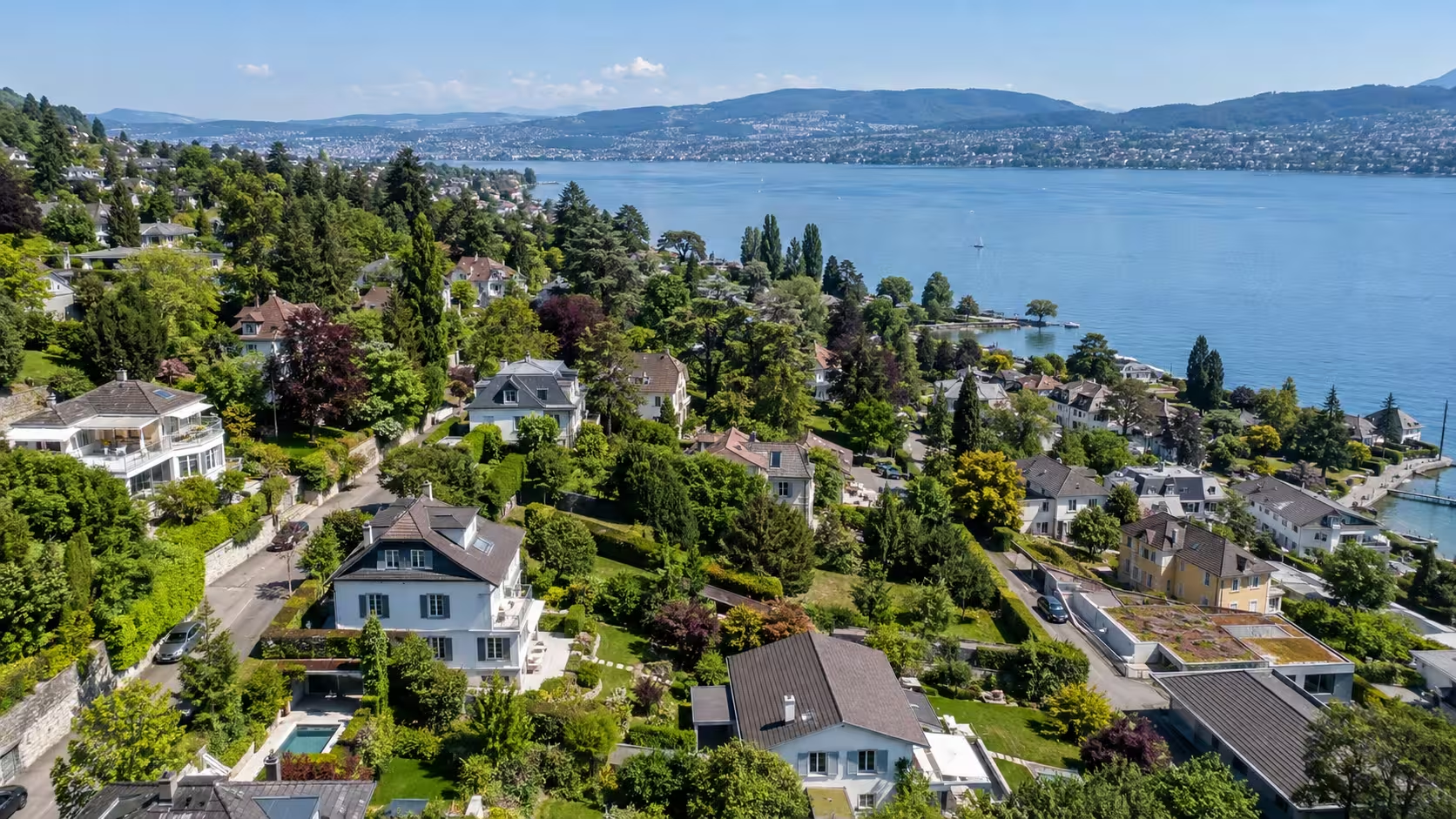
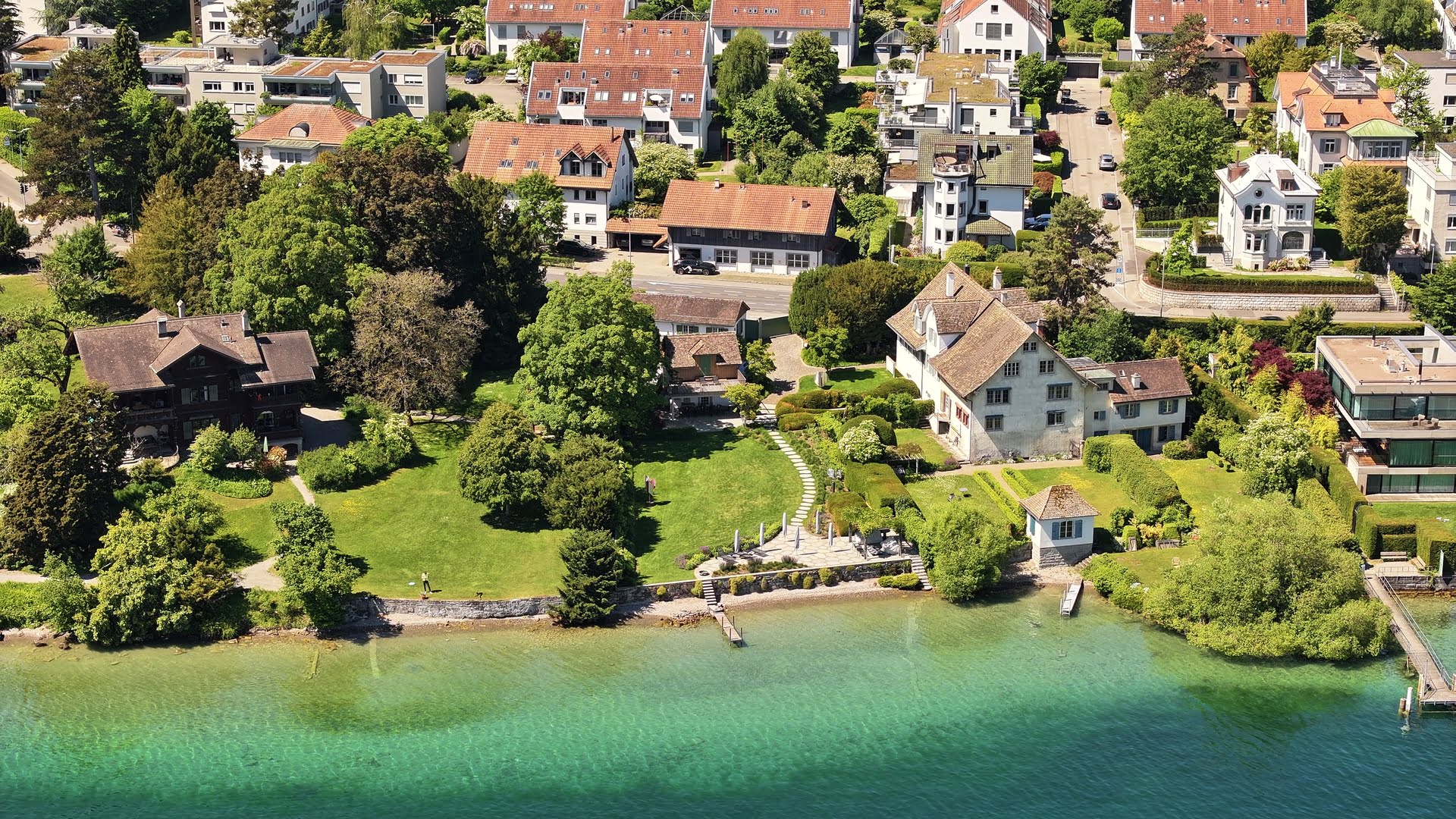
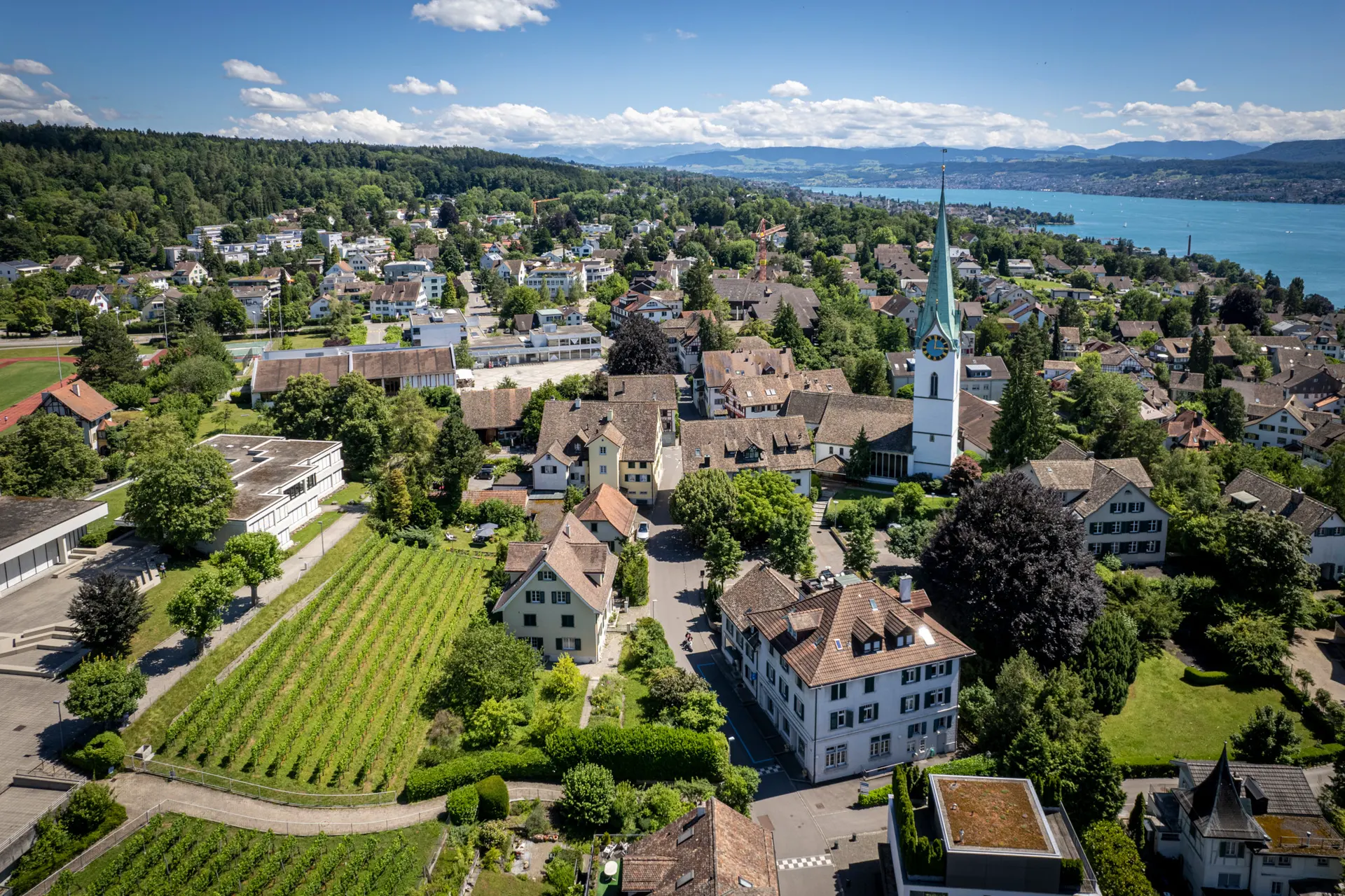
• The Zurich Gold Coast comprises the municipalities on the right bank of Lake Zurich, from Zollikon to Stäfa, and is one of the most sought-after residential areas in Switzerland.
• In practice, the purchasing process takes 6 to 12 weeks, from the financing confirmation and public notarization to the land registry entry.
• Buyers require at least 20% equity, 10% of which must be in hard capital. Banks assess affordability using a calculated interest rate of 5%.
• The Canton of Zurich does not levy a property transfer tax. Consequently, ancillary purchase costs are among the lowest in Switzerland.
• A significant portion of transactions on the Gold Coast takes place off-market. Without a local network, some of the available properties remain invisible.
Buying a property on the Zurich Gold Coast is one of the most significant financial decisions you can make in Switzerland. The municipalities on the right bank of Lake Zurich are among the most value-stable residential locations in the country. When you buy here, you are not just purchasing a property; you are investing in a quality of life that has lost none of its appeal over the decades.
This guide will walk you through the entire purchasing process. You will learn how the Gold Coast market functions, which municipality suits your lifestyle, how financing is structured in Switzerland, and the steps involved from your first viewing to the handover of the keys.
What makes the Zurich Gold Coast so desirable?
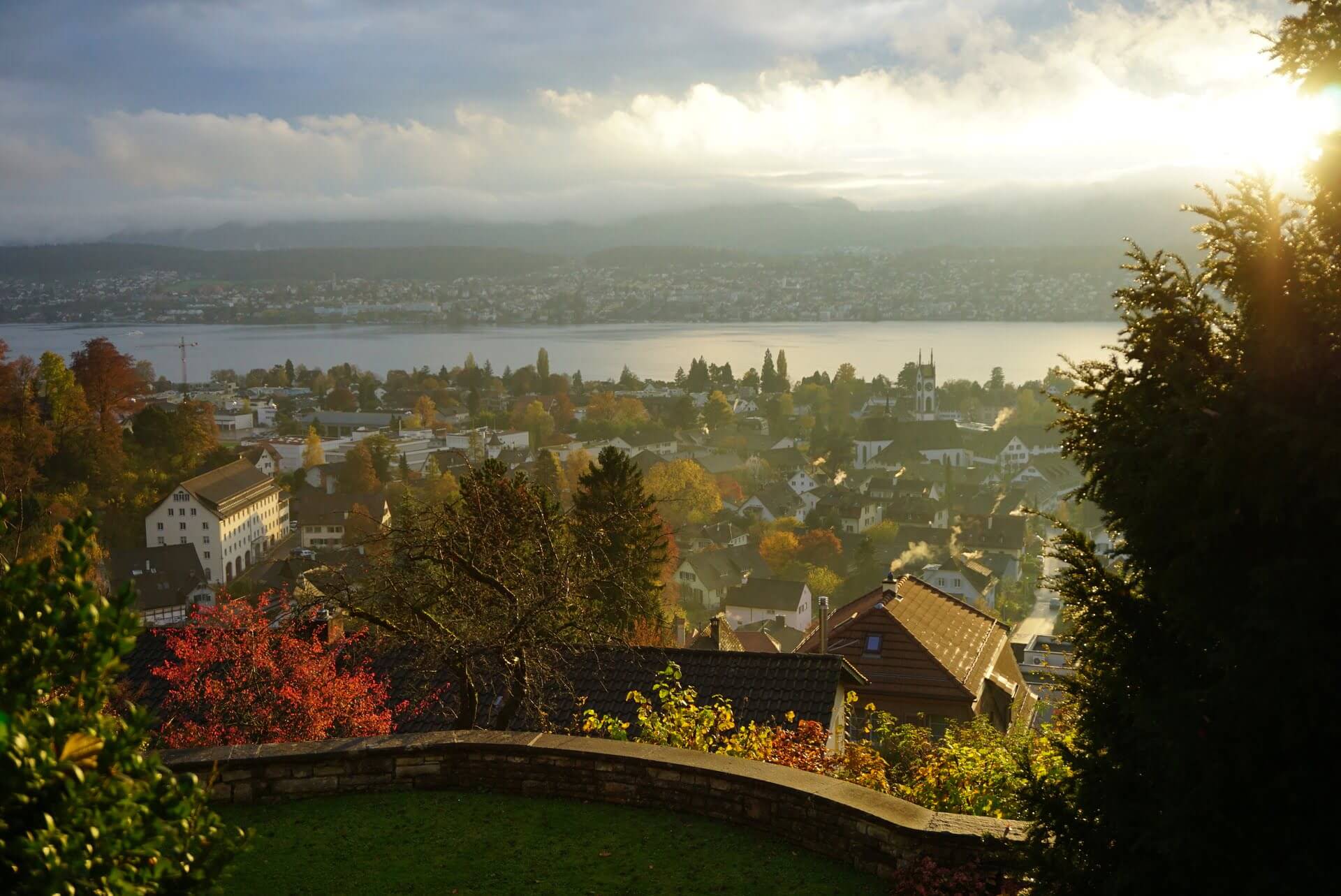
The Gold Coast owes its name to the evening sun, which illuminates the right bank of the lake longer than the opposite shore. This exposure to sunlight is more than just a poetic detail; it defines the quality of living, the vegetation on the vineyard slopes, and ultimately, property prices.
Three factors make the region unique. First, the location itself, with lake views, Alpine panoramas, and proximity to the city of Zurich, which ranges from ten to thirty minutes depending on the municipality. Second, the tax environment, as several Gold Coast municipalities are among the most tax-efficient in the canton. Zumikon leads this list with the lowest tax rate in the entire Canton of Zurich. Third, the infrastructure, ranging from international schools and first-class healthcare to a dense network of sports, cultural, and leisure facilities.
This combination attracts an affluent, international clientele. The result is a market where demand structurally exceeds supply and where quality properties change hands quickly and often discreetly. You can find an overview of all current properties on the Gold Coast in our portfolio.
The Gold Coast real estate market at a glance
The market on the right bank of Lake Zurich remains stable at a high level in 2026. Following the dynamic phase between 2020 and 2022, price growth has normalized. Banks and market observers expect an annual price increase of around three to four and a half percent for the Canton of Zurich. There are no signs of significant corrections on the Gold Coast, supported by low interest rates and a chronically tight supply.
However, price ranges within the region are substantial. Apartments in prime locations such as Küsnacht or Zollikon command prices per square meter ranging from 18,000 to over 25,000 francs, and significantly more in exceptional cases. The central and eastern municipalities, such as Männedorf, Uetikon am See, or Stäfa, offer a more accessible price range without compromising on location or quality of life. Single-family homes in top locations regularly change hands for three to five million francs, though lake views and direct lake access can justify premium prices well above that.
The long-term value appreciation is remarkable. Over the last 25 years, property prices in the Zurich area have nearly tripled. Historically, those who buy on the Gold Coast have not only found a home but have also made a sound investment.
A market with two faces
What outsiders often underestimate is the discreet side of the market. Especially for those who Buying property in Küsnacht looking to do so will encounter a market where a significant portion of transactions takes place off-market. The same applies to houses in Zollikon and apartments in Erlenbach. Sellers value the confidentiality, while buyers appreciate the exclusive access. Those who only search on the major portals simply miss out on a portion of the actual inventory. A locally connected real estate partner opens doors here that would otherwise remain closed. Our separate article on buying a house in Küsnachtexplains exactly how this discreet market in Küsnacht works.
When is the right time to buy?
Hardly any question is asked of real estate consultants more often, and hardly any can be answered more reliably by looking at market mechanics rather than forecasts. Experience shows that those waiting for the perfect moment on the Gold Coast often wait a long time, as the ideal time to enter the market only becomes apparent in hindsight.
The current environment, however, offers clarity. The Swiss National Bank has lowered the key interest rate to zero, making fixed-rate mortgages historically affordable and keeping financing costs predictable. At the same time, price growth has normalized following the boom years. Buyers today operate in a more predictable market than just a few years ago, with less bidding competition and more time for thorough due diligence.
Personal timing is more important than market timing. Three questions determine whether the time is right for you. Is the financing comfortably affordable even at a calculated interest rate of 5%? Do you plan to stay in the property for at least eight to ten years so that purchase costs and any market fluctuations are balanced out? And do you still have sufficient reserves for the unexpected after the purchase? If you can answer these three questions with yes, you do not need to time the market. In a location like the Gold Coast, long-term holding has historically offset any short-term fluctuations. If you are ready, it is worth taking a look at the current listings on the Gold Coast.
Which municipality suits you?
The Gold Coast is not a homogeneous market, but a mosaic of municipalities with very different characters. Choosing the right location is at least as important as choosing the right property.
The classics near the city: Zollikon and Küsnacht
Zollikon is the gateway to the Gold Coast, combining immediate proximity to the city with the green, quiet character of a lakeside community. Anyone looking to buy property in Zollikon will find a limited but first-class selection between the village center and Zollikerberg. Küsnacht is considered the most prestigious address in the region, featuring the famous Goldbach district, excellent private schools, and a market that ranks among the most selective in Switzerland. A Buying a house in Küsnacht is considered one of the most exclusive real estate investments in the country.
The central Gold Coast: Erlenbach, Herrliberg, and Meilen
Erlenbach captivates with its intimate village character, historic timber-framed houses, and direct access to the lake. The supply of real estate in Erlenbach is intentionally limited and highly sought after. Herrliberg is situated on the elevated slopes of the Pfannenstiel. Houses in Herrliberg offer panoramic locations with sweeping views of the lake and the Alps, combined with attractive tax conditions. Meilen is the largest and most diverse municipality in this section, featuring several distinct districts and the best public transport connections in the region. Buying an apartment in Meilen is a realistic option for a wide range of buyers thanks to a broader price spectrum.
The eastern Gold Coast: Uetikon am See, Männedorf, and Stäfa
This section is a discovery for buyers looking for Gold Coast quality at a more accessible price point. Those who want to buy real estate in Uetikon am See benefit from the transformation of the former industrial area into a modern lakeside quarter right on the water. Buying a house in Männedorf means experiencing authentic village life with full infrastructure, including a hospital and an international school. Finally, Stäfa is the largest municipality on the Gold Coast by area, characterized by a centuries-old winemaking tradition and a vibrant old town. Apartments in Stäfa are easier to find than in the smaller neighboring municipalities due to the wider range of options.
Above the lake: Zumikon
Zumikon is located on the Pfannenstiel plateau above the lakeside municipalities and offers what is rarely found on the shore: spacious plots, plenty of greenery, absolute tranquility, and the lowest tax rate in the canton of Zurich. For the Buying property in Zumikon The Forchbahn, with its direct connection to Zurich Stadelhofen, and the Inter-Community School are also compelling arguments for international families.
The extended catchment area: Zurich, Wetzikon, and Rüti
Those looking at the broader Zurich real estate market will find Seefeld and District 8 to be the urban counterpart to the Gold Coast. Anyone looking to buy an apartment in Zurich will find Belle Époque period buildings, exclusive lake-view locations, and short urban commutes here. In the Zurich Oberland, you can buy a house in Wetzikon or buy a property in Rüti at a significantly more accessible price point, with full infrastructure and fast rail connections. A compelling option for families and investors looking at growth potential.
Condominium or single-family home: What are the differences when buying?
On the Gold Coast, a growing portion of the supply consists of condominiums, particularly in new construction projects in the lakeside municipalities. Buying a condominium follows the same legal steps as buying a house, but requires an additional level of due diligence that many buyers underestimate.
What you need to check additionally for condominiums
When you buy a condominium, you are not just buying your own four walls, but also a share in a community. The deed of foundation and the regulations define which parts belong to you alone, which are communal, and what usage rights exist. The value quota determines your share of the common costs and your voting weight at the assembly.
The minutes of the last condominium owners' meetings are particularly revealing. They show whether renovations are pending, whether the community functions harmoniously, and whether reserves have been set aside. The renewal fund is the key metric here. If it is underfunded and a roof or facade renovation is due, owners may face a special assessment of tens of thousands of francs. This check should be done before price negotiations, because a low purchase price with an empty renewal fund is often not a bargain, but a deferred bill.
The trade-off
A single-family home offers maximum autonomy and, on the Gold Coast, the greatest potential for value appreciation, as building land by the lake is finite. In return, you bear the maintenance and renovation costs alone. A condominium scores with a lower entry price, shared maintenance burdens, and often a better location, but requires a willingness to share decisions with the community. Which path is right is ultimately a lifestyle question, not just a calculation of returns. You can find both types of properties in our current Gold Coast listings.
Financing: What banks require
Swiss financing rules are strict but transparent. Those who know them can realistically assess their purchasing power before the property search begins. This is exactly the order in which it should happen, because on the Gold Coast, speed is often the deciding factor. Those who can provide a written financing confirmation have a decisive advantage for sought-after properties.
The equity rule
Banks generally finance a maximum of 80% of the purchase price. At least 20% must be provided as equity, of which at least half must come from so-called "hard" equity. This includes savings, securities, and Pillar 3a assets, but not funds from a pension fund. These may be used for the second half of the equity, either as an advance withdrawal or as a pledge.
For a purchase price of two million francs, this specifically means at least 400,000 francs in equity, of which 200,000 francs must come from hard assets. In addition, there are incidental purchase costs, which cannot be financed through the mortgage.
The affordability calculation
The second hurdle is affordability. Banks do not check whether you can afford the mortgage at the current interest rate; instead, they use a calculated interest rate of around 5%. To this, they add 1% of the property value for maintenance and ancillary costs, as well as the amortization of the second mortgage. The sum of these calculated housing costs must not exceed one-third of your gross income.
This rule may seem conservative, but it has proven its worth over decades. It ensures that the financing remains sustainable even if interest rates rise significantly. For a property worth two million francs with 20% equity, this results in a required gross income of around 360,000 francs per year. Those who contribute more equity significantly lower this threshold and generally receive better interest rate terms.
Choosing a mortgage model
There are three basic models to choose from. The fixed-rate mortgage, with terms ranging from two to fifteen years, offers planning security and is the most popular model, with a market share of around three-quarters. The SARON mortgage follows the money market rate and is currently cheaper, but it is susceptible to fluctuations. The variable-rate mortgage is rarely used in practice anymore. Many experts recommend splitting the mortgage into two or three tranches with different terms to spread the interest rate risk upon renewal. We would be happy to discuss your financing situation in a free initial consultation.
Buying property as a foreigner: What the Lex Koller allows
The Gold Coast has been attracting international buyers for decades, from executives of global companies to families moving to the region for its schools and quality of life. For them, one question comes first: Am I even allowed to buy property in Switzerland? The answer is governed by the Federal Act on the Acquisition of Real Estate by Persons Abroad, better known as the Lex Koller.
An overview of the rules
Residency and permit status are the deciding factors. EU and EFTA citizens residing in Switzerland with a B or C permit can buy without restrictions, on equal footing with Swiss citizens. Third-country nationals with a C permit can also buy freely. With a B permit, third-country nationals may purchase a primary residence at their place of residence without a permit, provided they occupy it themselves.
Those without residency in Switzerland are subject to a permit requirement, and these permits are essentially only granted for holiday homes in tourist cantons. The Canton of Zurich does not issue such quotas. For buyers without Swiss residency, purchasing residential property on the Gold Coast is therefore practically impossible. In this case, the path forward is to establish residency, which is often the reason for the purchase for many international professionals anyway. Küsnacht and Zumikon are particularly popular with international buyers, not least because of the international schools in both municipalities.
What could change
In the spring of 2026, the Federal Council submitted a proposal to tighten the Lex Koller for consultation. Among other things, a permit requirement for third-country nationals when purchasing a primary residence is being discussed. This is not yet current law, but the direction is clear. International buyers planning a purchase that does not require a permit have good reason not to put off their plans. For more complex scenarios, such as purchasing through companies or mixed-use properties, we recommend seeking legal advice at an early stage.
The purchase process step by step
In practice, it usually takes six to twelve weeks from initial interest to the handover of keys. The process in Switzerland follows a clearly regulated pattern.
Step 1: Clarify financing
Before you start your search, your financing should be in place. A written financing confirmation from your bank signals to sellers and agents that you are a serious buyer. On the Gold Coast, where desirable properties often attract multiple interested parties, this proof is frequently your ticket to a viewing.
Step 2: Search and view
Define your criteria realistically and seek advice from the municipalities rather than focusing on just one. Often, a neighboring municipality offers a better property at a better price. In addition to public platforms, take advantage of access to off-market properties through a locally connected partner. When viewing, it is worth scheduling a second visit at a different time of day to fully assess sunlight, noise levels, and the surrounding environment.
Step 3: Review and negotiate
Before making an offer, the most important documents should be on the table. These include the land register excerpt with any easements, the cadastral plan, and, in the case of condominium ownership, the deed of foundation along with regulations and minutes from recent meetings, as well as information on the structural condition. An independent valuation helps to back up your own negotiating position with facts. In a seller's market like the Gold Coast, the room for maneuver is limited but exists, especially for properties in need of renovation.
Step 4: Reservation and purchase agreement
Once both sides have reached an agreement, a reservation agreement often follows. It is important to know that a simple written reservation is not legally binding in Switzerland. The purchase only becomes binding with the public notarization. The notary draws up the purchase agreement based on the agreement, checks the ownership status, and coordinates with the bank to provide the irrevocable payment guarantee, which is a prerequisite for processing if external financing is involved.
Step 5: Notarization and land register entry
The notary appointment usually lasts 45 to 60 minutes. Both parties appear in person, the contract is read aloud, and it is publicly notarized. While the purchase is contractually sealed at this point, you are not yet the owner. Only the entry in the land register legally transfers ownership. The notary notifies the land registry office of the change of ownership, while the bank transfers the purchase price. Depending on the canton, the entry takes two to four weeks.
Step 6: Handover
The property passes into your possession with the handover of keys and the handover protocol. Document the condition carefully, record meter readings, and clarify the handover of all keys, garage remotes, and documents. From this point on, you bear the benefits and risks of the property. If you would like personal guidance throughout the entire purchasing process, we are here to help.
Incidental purchase costs in the Canton of Zurich: A clear location advantage
When buying real estate in Switzerland, incidental costs amount to two to five percent of the purchase price, depending on the canton. The Canton of Zurich is one of the most affordable locations in the country, as the property transfer tax was abolished back in 2005.
What remains are the notary and land registry fees. According to the Zurich notaries these amount to 0.1% of the purchase price each for the notarization and the land register entry. If a mortgage with a new mortgage certificate is involved, an additional 0.1% of the mortgage amount is charged for its creation. For a purchase price of two million francs with a mortgage of 1.6 million francs, this results in fees in the range of 7,000 to 8,000 francs. By comparison, the same purchase in cantons with a property transfer tax would quickly cost an additional 30,000 to 60,000 francs.
It is important for your planning that these incidental costs cannot be financed through the mortgage. They must be available in addition to your equity. In the Canton of Zurich, buyers and sellers are jointly and severally liable for the fees of the purchase agreement, which are usually split equally. The buyer bears the costs for the mortgage certificate alone. This cost advantage is another argument for favoring real estate in the Canton of Zurich over other regions.
Typical mistakes when buying real estate and how to avoid them
Starting the search without a financing confirmation. On the Gold Coast, desirable properties are snapped up quickly. Anyone who only talks to the bank after the viewing loses valuable days and often the property itself.
Searching only on public portals. A significant portion of the market, especially in the premium segment, never appears on any platform. Without a local network, this market remains invisible.
Underestimating additional costs. Purchase costs, moving expenses, initial investments, and a liquidity reserve must be included in your budget. Many financing plans fail not because of the purchase price, but due to a lack of reserves.
Ignoring the micro-location. Within the same municipality, identical properties can differ in price by several hundred thousand francs depending on their specific location. Sunlight exposure, lake views, hillside positioning, and noise levels determine long-term value.
Negotiating emotionally instead of based on facts. An independent valuation and knowledge of comparable transactions provide the best basis for negotiation. Those who know the market negotiate with more composure and success.
Reviewing documents superficially. Easements in the land register, upcoming renovations for condominiums, or pending construction projects in the neighborhood can significantly impact value. This review must take place before signing, not after.
How BC Living supports you during your purchase
BC Living specializes in Zurich's Gold Coast and guides buyers through the entire process. This begins with honest advice on which municipality and micro-location truly suit your needs, extends to access to our network—which includes off-market properties—and continues through to support during viewings, price negotiations, and the notarization process.
Our goal is simple. We want you to find not just any property, but the right one, at the right price, through a process that provides security rather than stress. Discover all current properties on the Gold Coast or schedule a free initial consultation.